
PORT OF HOPE
Krakow for a Free Russia
Association of Russian Anti-Putin Activists in Krakow


Prisoners of war: Ukrainians in Russian captivity.

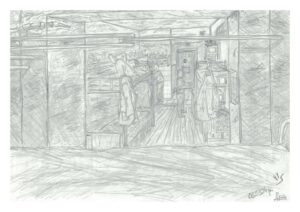
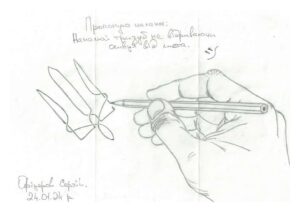

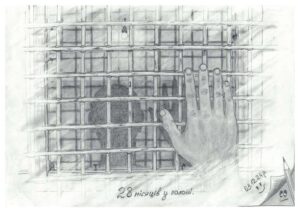
Since the start of Russia’s military aggression against Ukraine in 2014, many Ukrainians have found themselves in Russian prisons; following the start of the full-scale invasion in 2022, the scale of the persecution has increased many times over.
Russia is persecuting prisoners of war and civilians in the occupied territories: men and women, retirees, and young people are accused of “terrorism,” “sabotage,” or “espionage”—charges that can result in decades of imprisonment.
Civilian political prisoners are particularly vulnerable to violence at the hands of the Russian state.
Prisoners of war have a chance to return to Ukraine through prisoner exchanges, whereas in the case of civilians, international humanitarian law requires their unconditional release, not an exchange. In practice, this means that many of them remain in Russian prisons for years, with no real possibility of returning home.
No one can provide an exact number of Ukrainian prisoners, but according to various estimates, the number of Ukrainian civilians deprived of their liberty by the Russian authorities alone may reach 16,000–20,000, while the number of prisoners of war is currently estimated at 7,000. A great many Ukrainian prisoners have faced torture, sexual violence, threats, and abuse at the hands of Russian security forces.
The situation in the occupied territories is characterized by a particularly flagrant disregard for the laws and rights of the accused, even compared to Russia itself. The formal filing of charges is often preceded by abduction and prolonged detention without any legal status, accompanied by the regular use of torture.
Why are Ukrainians tortured?
To extract a confession. Torture is the “easiest” way to obtain the “desired” testimony; people incriminate themselves to end the pain. There are no known cases in which a Russian court has refused to issue a guilty verdict due to the use of torture.
Dehumanization. Ukrainians—especially prisoners of war—are viewed not as people entitled to protection and a fair trial, but as enemies whom the state has the right to destroy.
An element of Russia’s genocide against Ukraine. Under torture, Ukrainians are forced to renounce their Ukrainian identity. Torture is often accompanied by attempts to “re-educate” Ukrainians and force them to demonstrate loyalty to the Russian Federation and Russian state symbols. In addition, people are maimed and their spirits are broken so that, even in the event of an exchange, they would no longer be capable of returning to the front lines or to Ukraine’s civil defense.
As punishment. Torture is, in fact, an integral part of the repressive apparatus and is used as a method of punishment.
To intimidate. Public torture—previously unthinkable—is becoming part of public policy.
Unfortunately, the options available to human rights lawyers in Russia are currently extremely limited, so most Ukrainians detained in Russia or in the occupied territories have only court-appointed lawyers—that is, lawyers who collaborate with the state.
However, almost all of them—for now—are able to read and write letters, including via email, and receive packages.